



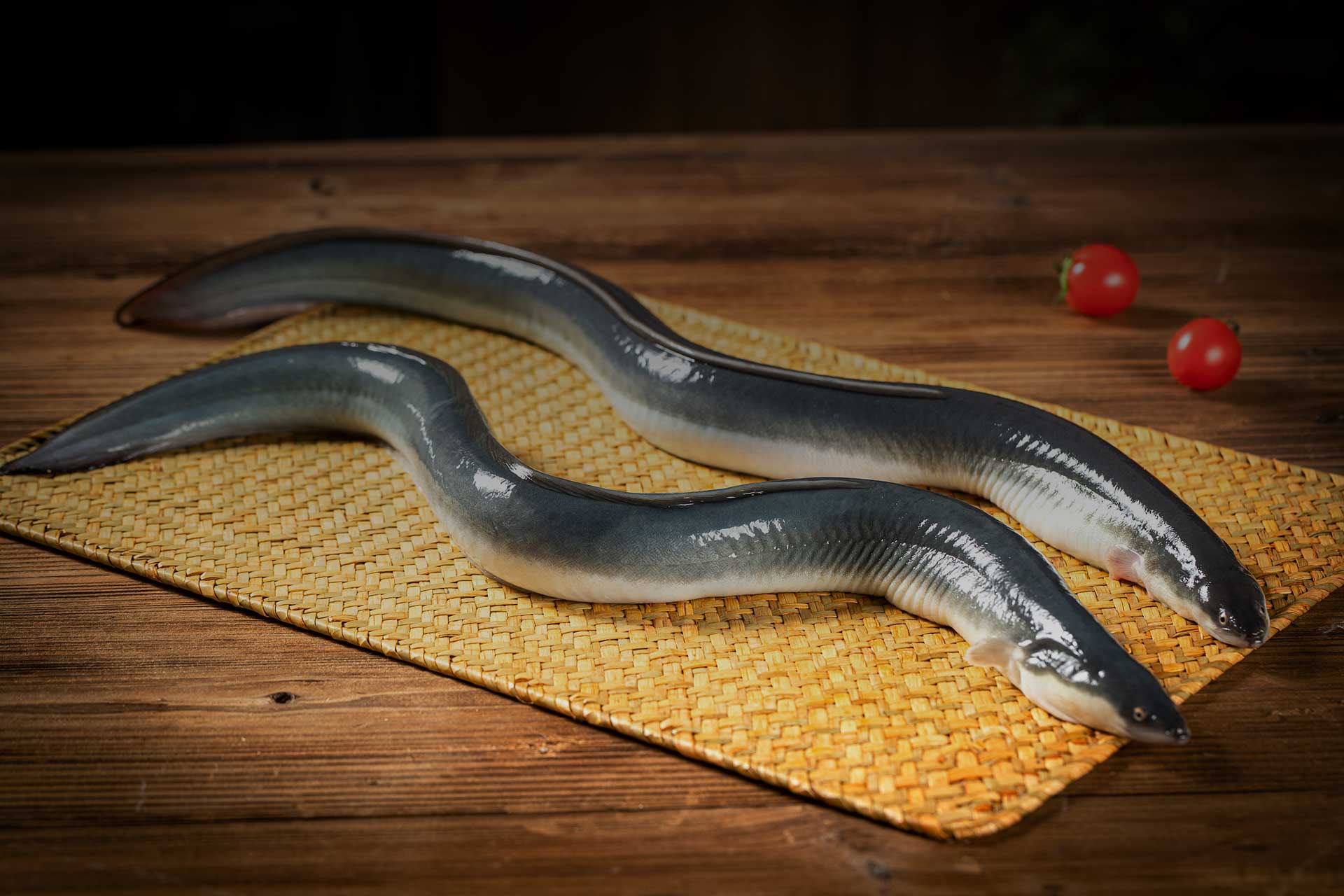
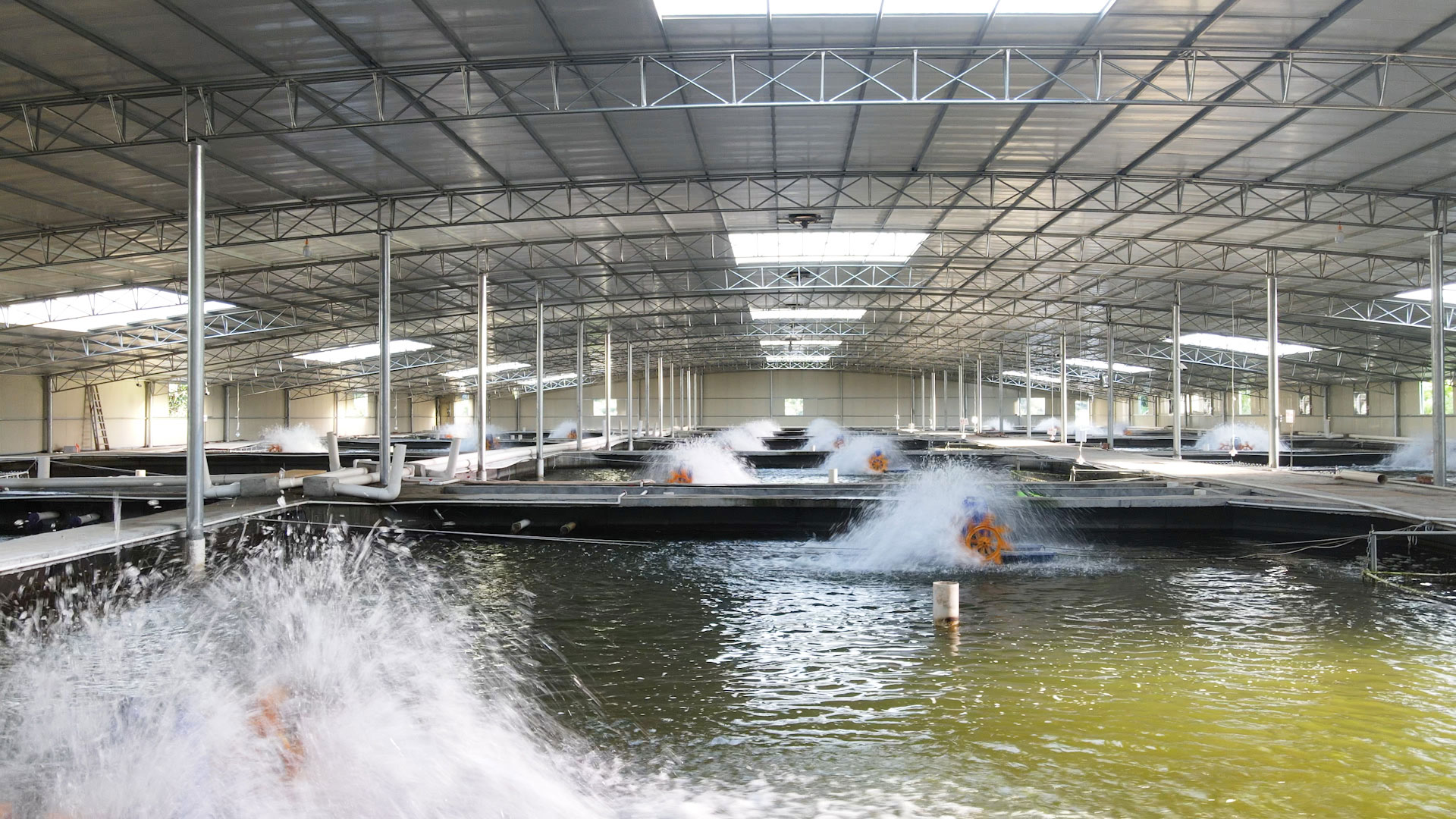
Eel seedlings are carefully selected from wild eel fry in the Pacific and Atlantic oceans, with proper legal documentation. They are farmed in China's eel capital Fujian and other regions with excellent climate and water quality conditions. From base site selection to seedling release, feed feeding, water quality control, preventive health care, daily management, eel selection and eel sales, the group meticulously operates the entire farming process, achieving antibiotic-free farming and factory-controlled farming models, ensuring the most authentic taste of grilled eel from the source.
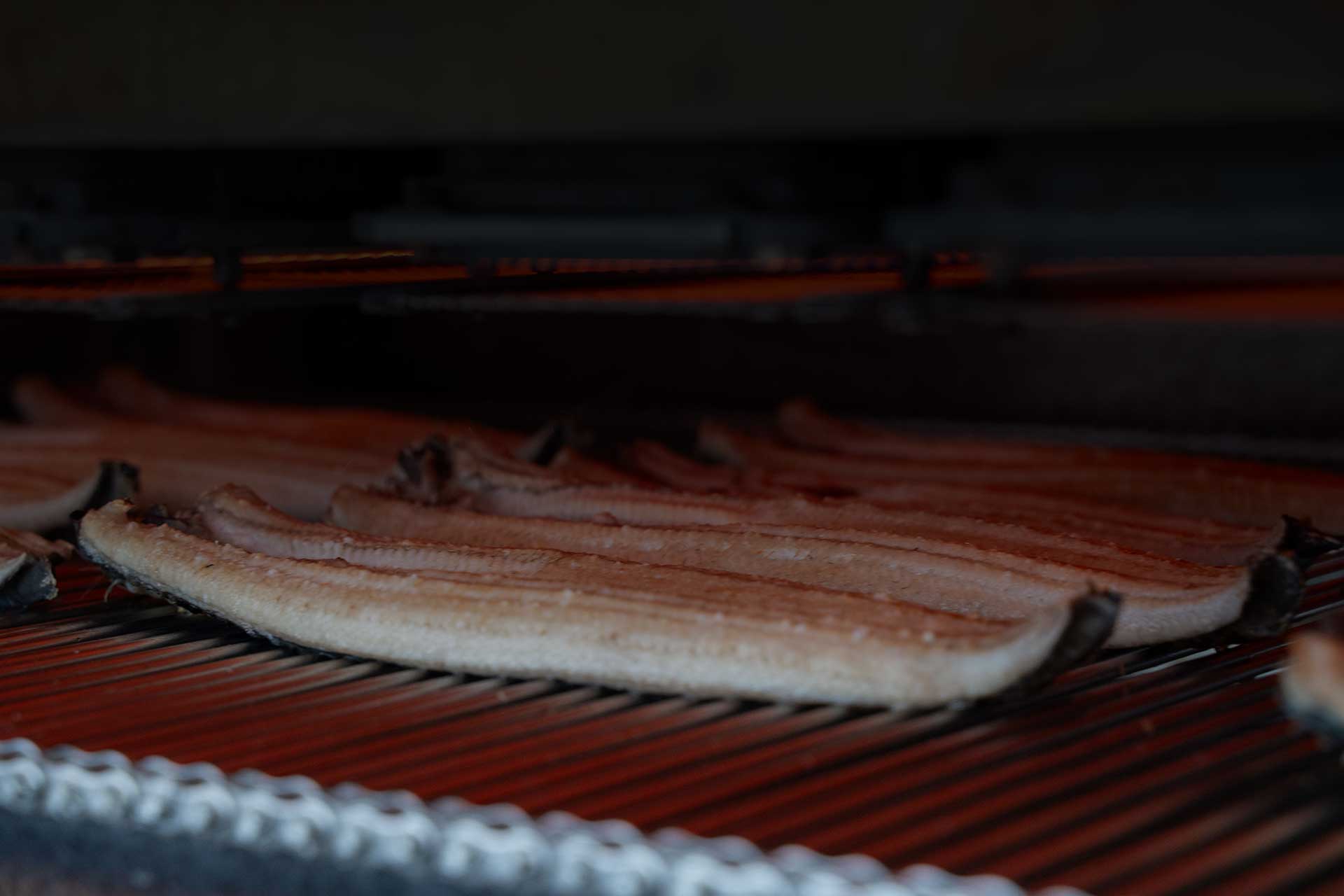
With the world's longest 116-meter grilling line, the company uses Japanese technology to meet production standards for export countries. The advantages include long grilling lines, delicate heat control, and the ability to regulate heat from low to medium to high, resulting in grilled eel that is crispy on the outside and tender on the inside, melting in the mouth. Additionally, premium grilled eel uses high-quality soy sauce with high amino acid content, which not only enhances the umami flavor but also makes the grilled eel taste sweeter.
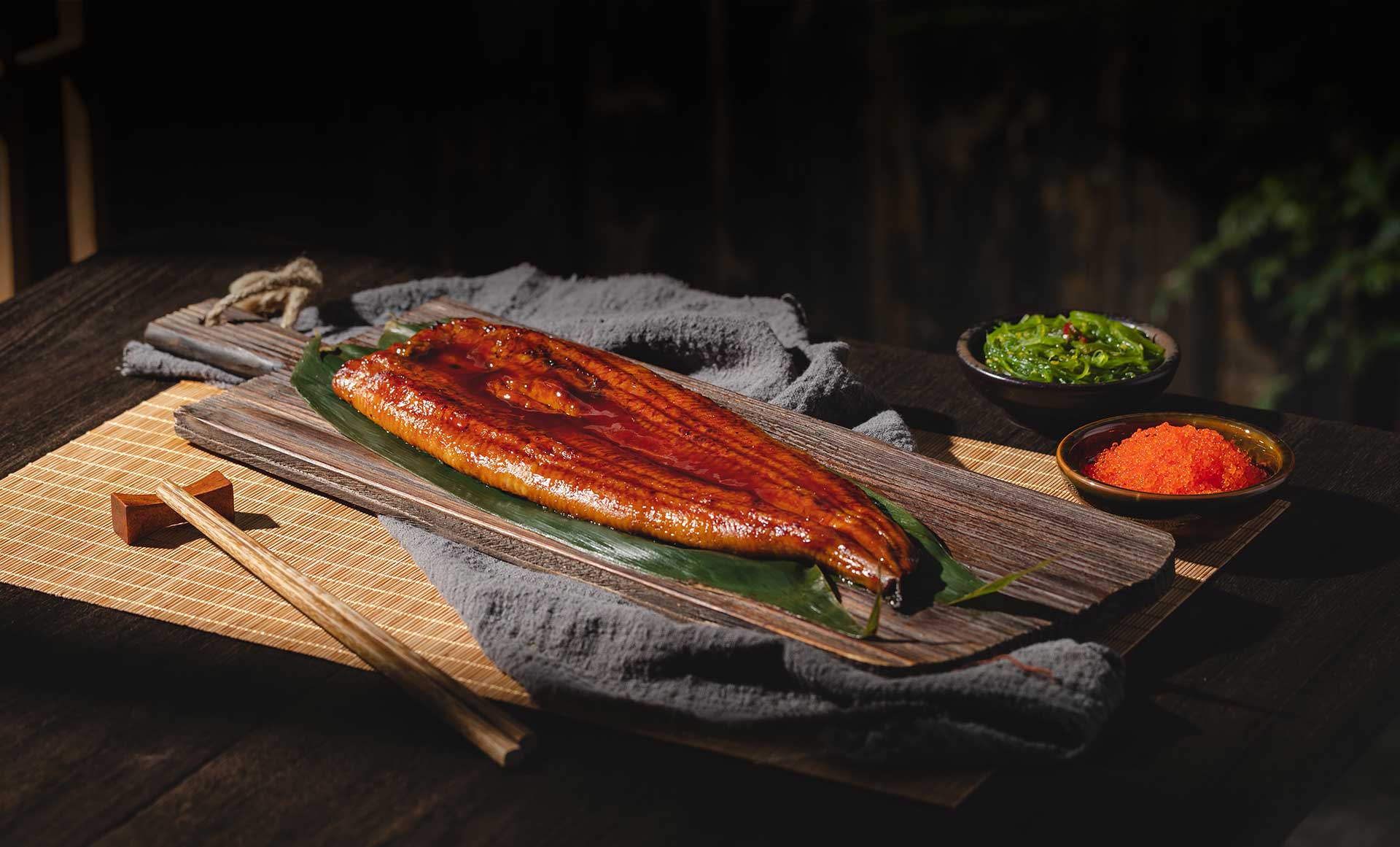
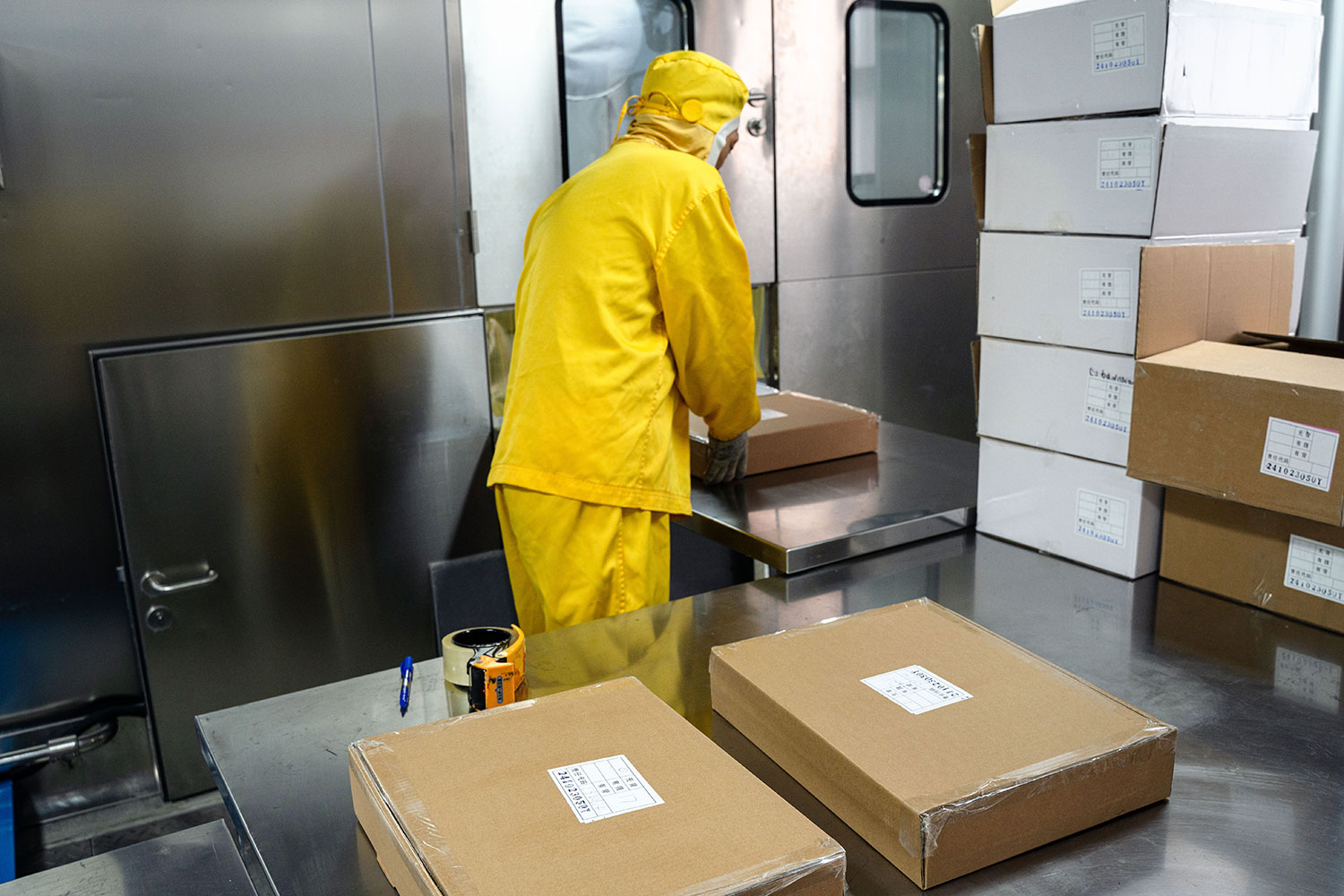
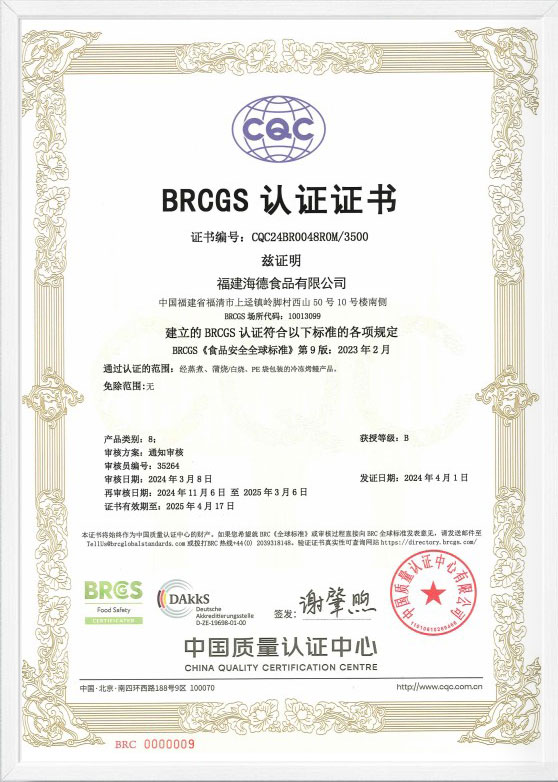
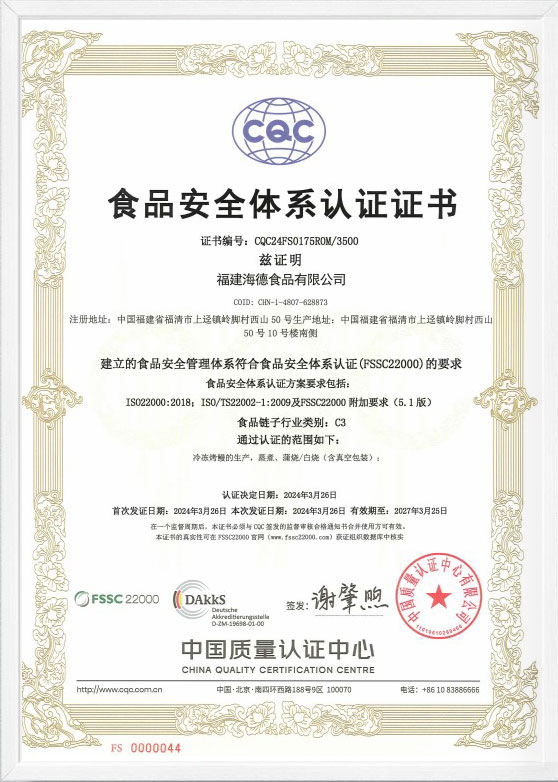
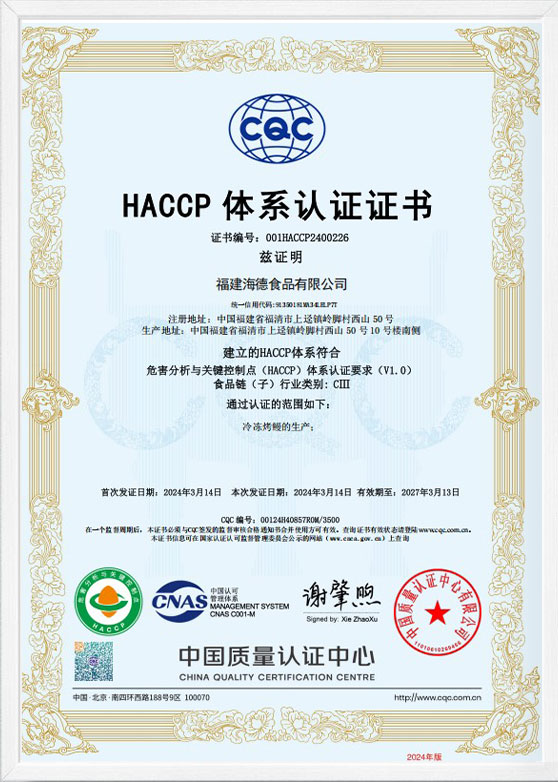
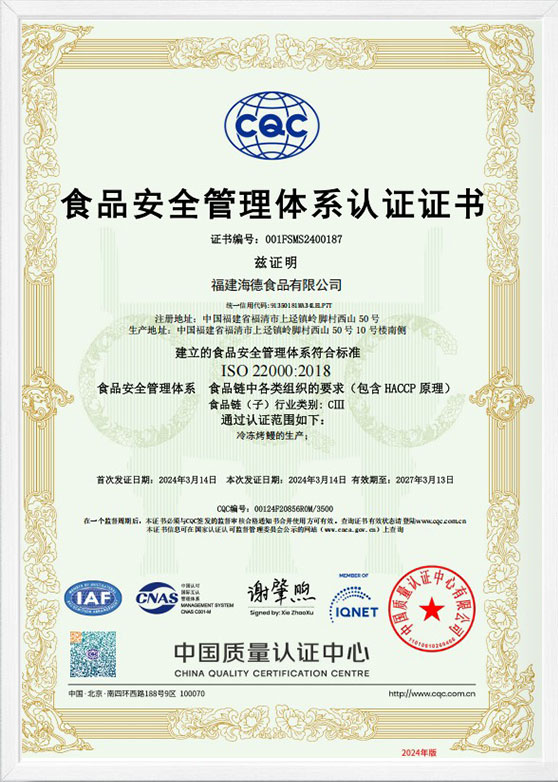
Meticulously crafting every quality aspect of food production. Domestic grilled eel products represented by Manlitang grilled eel have achieved a 100% pass rate in inspections by customs and Japan's Ministry of Health, Labor and Welfare, and have passed authoritative requirements for product quality and safety both domestically and internationally, including HACCP, ISO22000, FSSC22000, and BRC quality management system certifications, strictly following national inspection and quarantine standards for production quality and safety management.
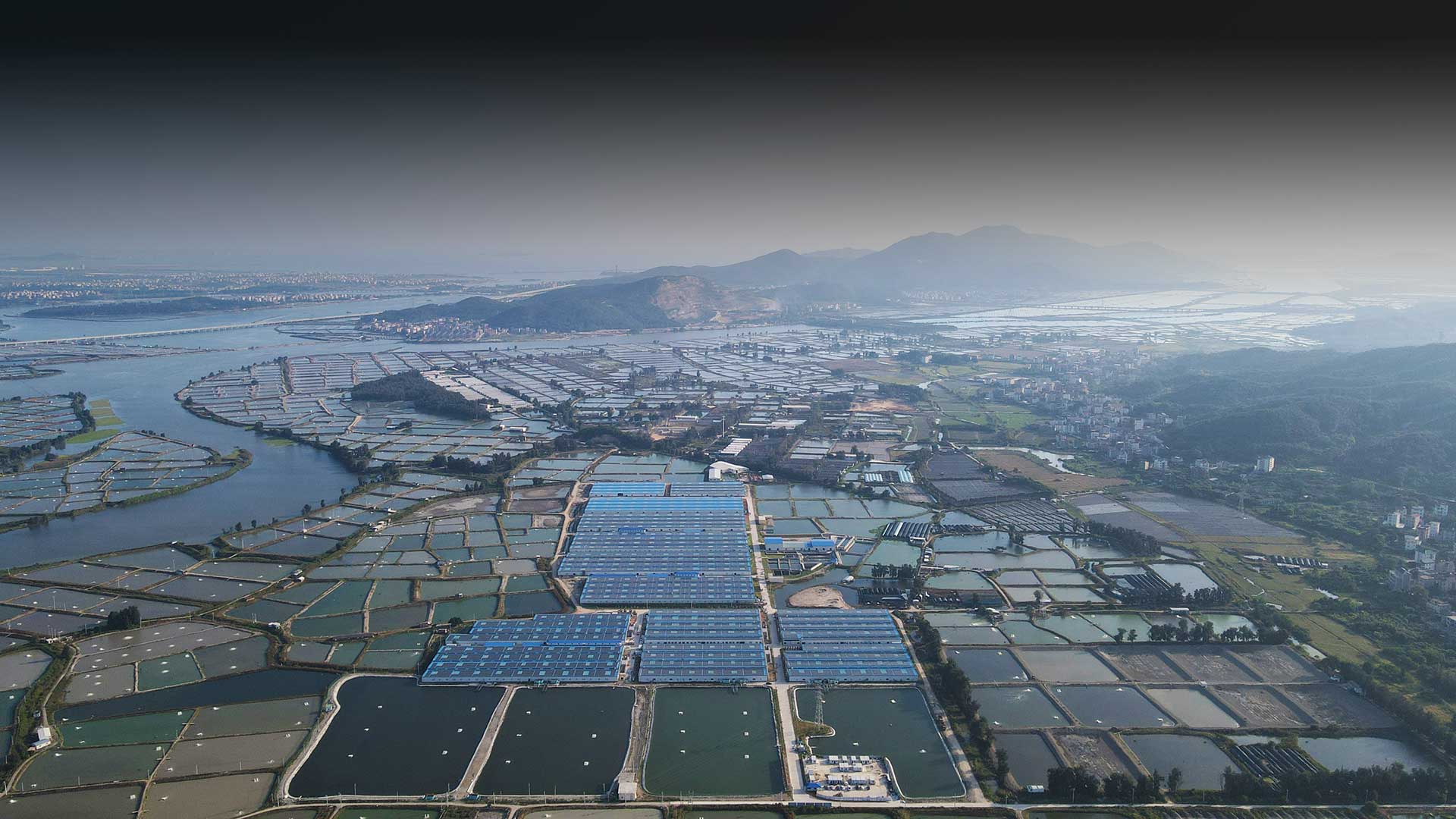
Own eel seedling suppliers and isolation quarantine facilities; own the largest production base for eel production and sales in China, own the largest-scale eel farming base in China, and own four major eel food bases.
Eel seedlings are carefully selected from wild eel fry in the Pacific and Atlantic oceans
The grilling lines used by the company adopt Japanese technology
Strictly following national inspection and quarantine standards for production
Own the largest production base for eel production and sales in China
 6 Strict Pre-Processing Steps
7 Kanto-Style Grilling Steps
5 Freshness Preservation Steps
6 Strict Pre-Processing Steps
7 Kanto-Style Grilling Steps
5 Freshness Preservation Steps
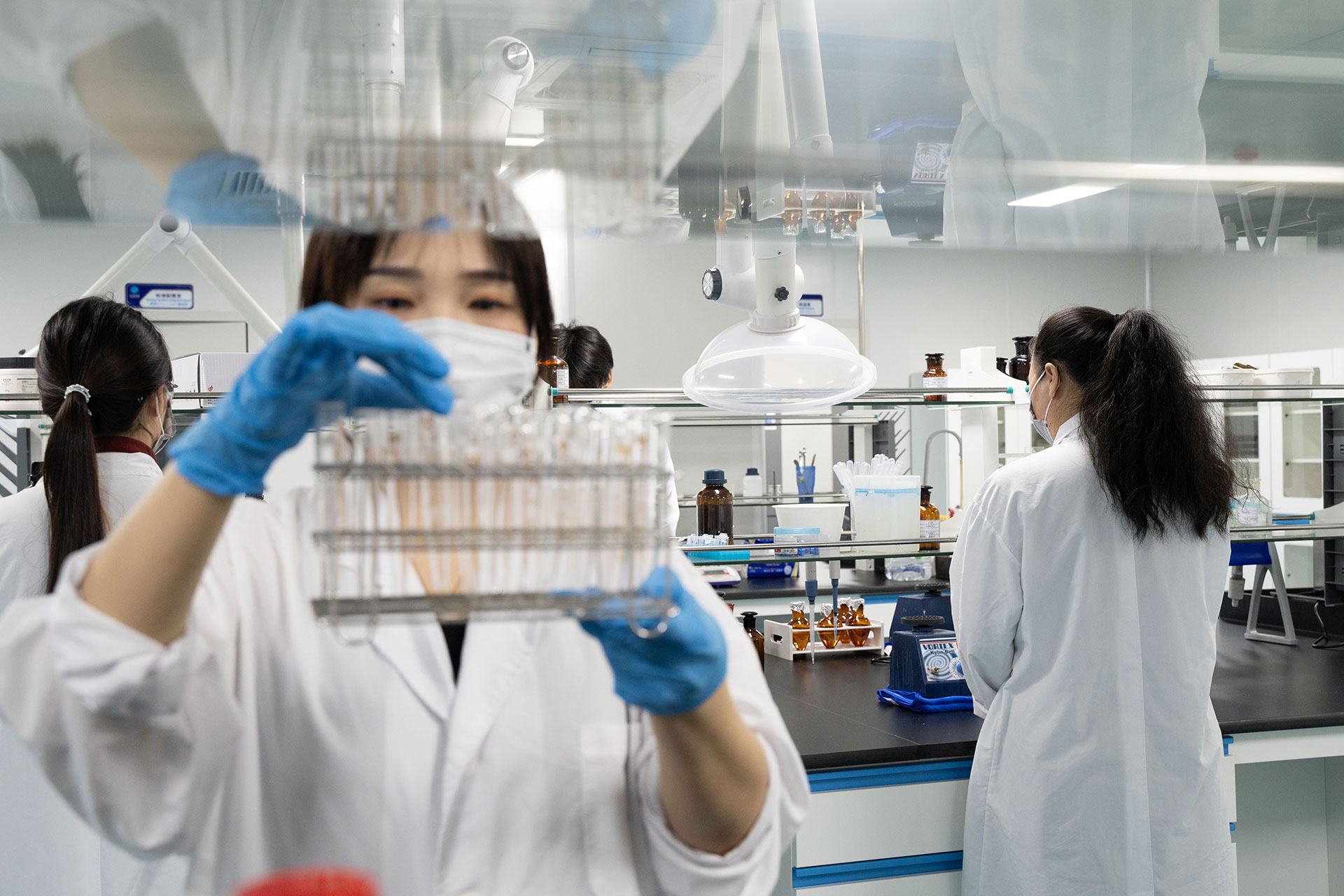
Quality and drug residue testing of eels in the farm before purchasing raw material eels.
Eels that pass pre-inspection are tested again for quality and drug residues upon entering the factory.
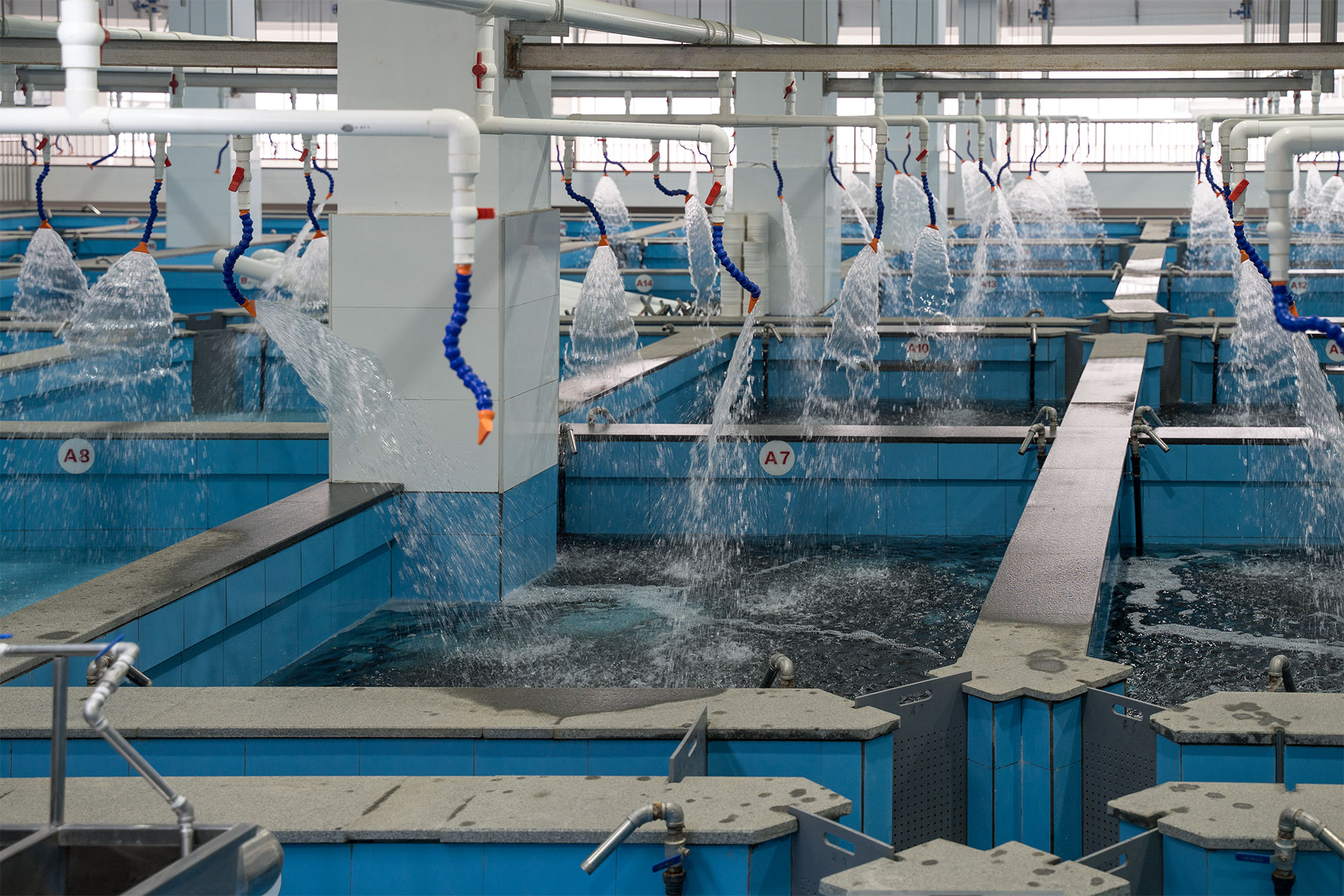
Through purified water hanging culture, residual food in the eel's intestines is emptied.
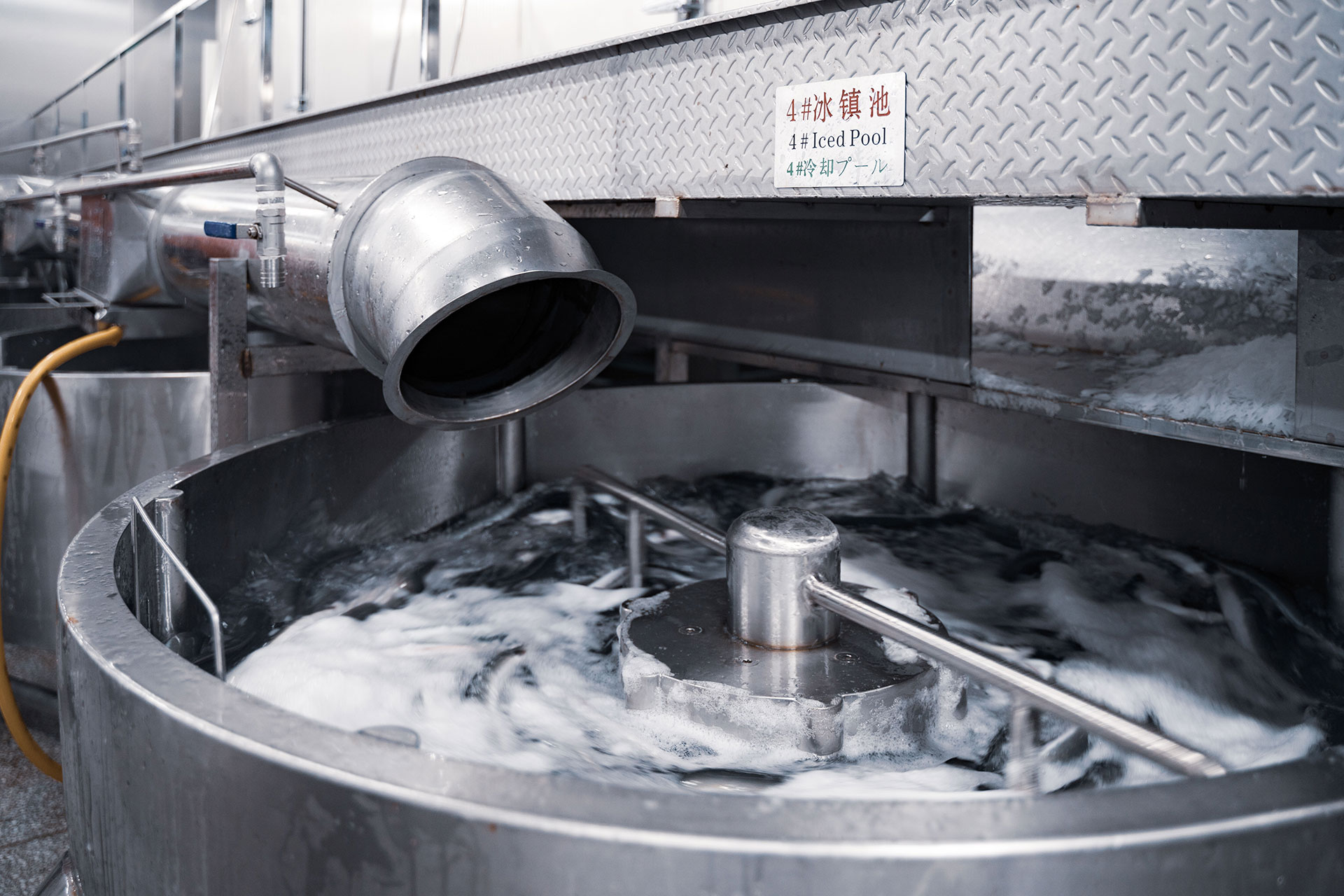
Ice rapidly cools down, eels enter a dormant state for humane slaughtering.
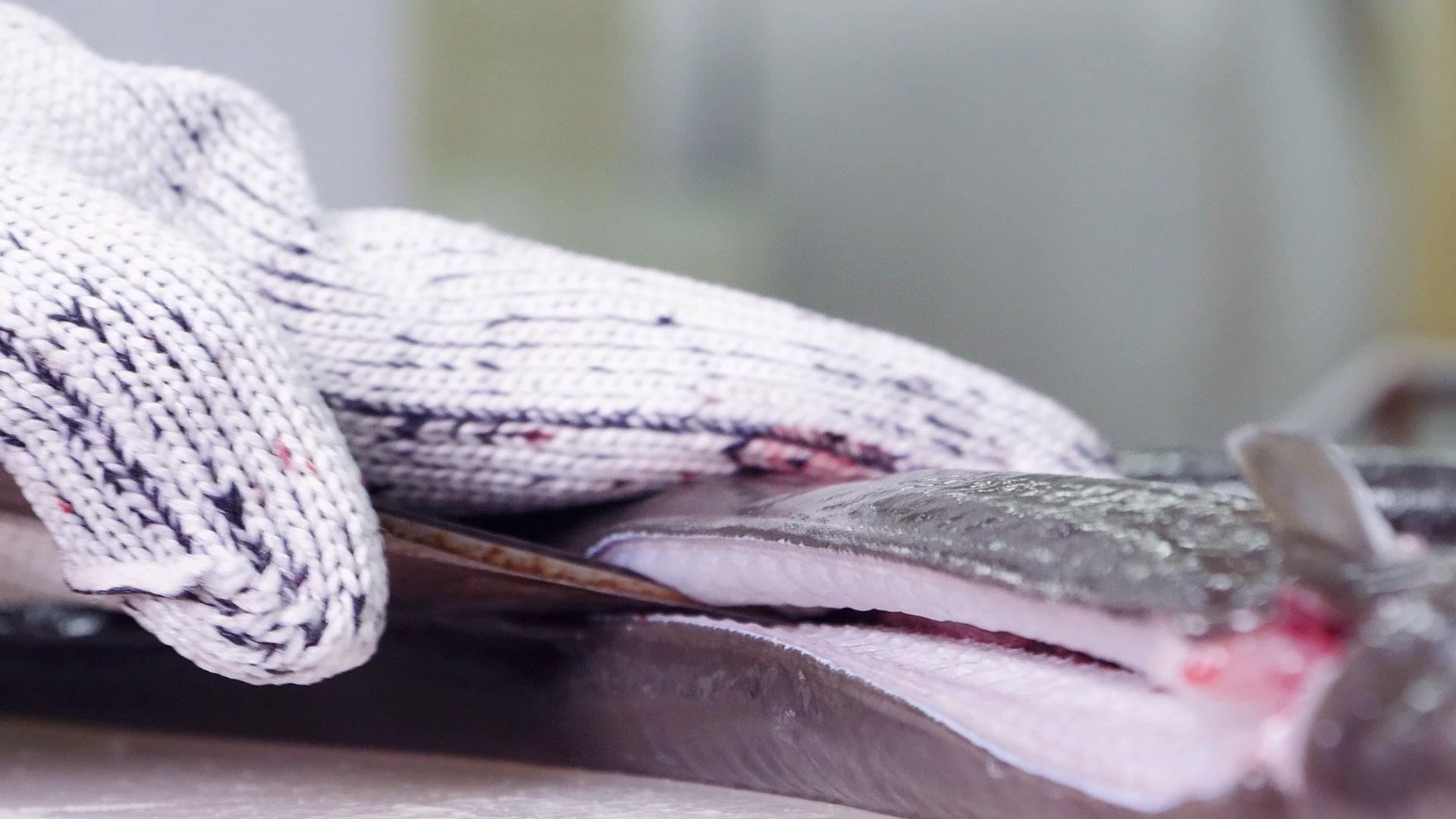
Remove head, bones, and internal organs to maintain the freshness of eel meat.
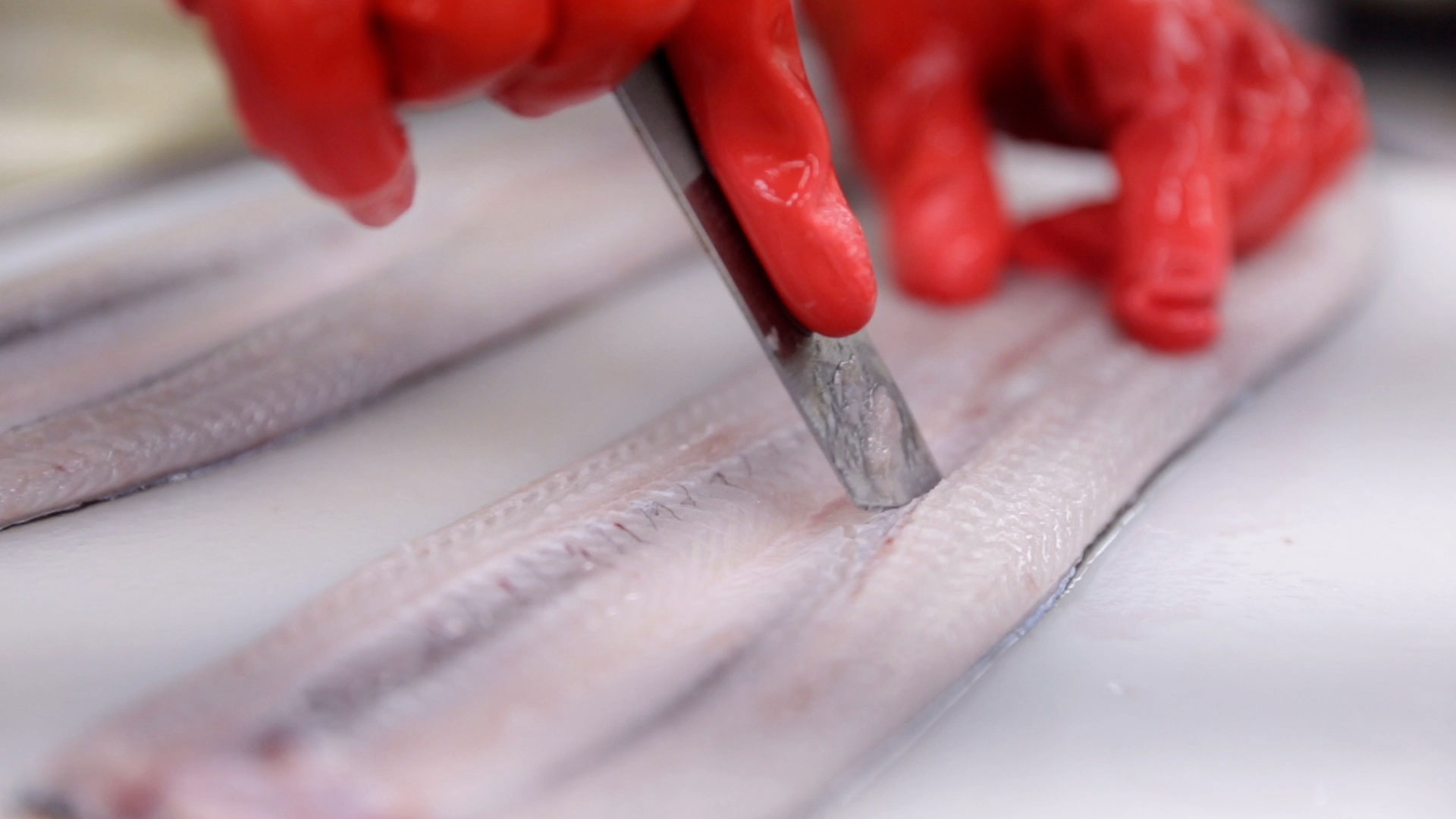
Washing, seasoning, and size sorting to ensure eel fillets are uniform and flat.
Grill the eel skin side to remove fishy odor.
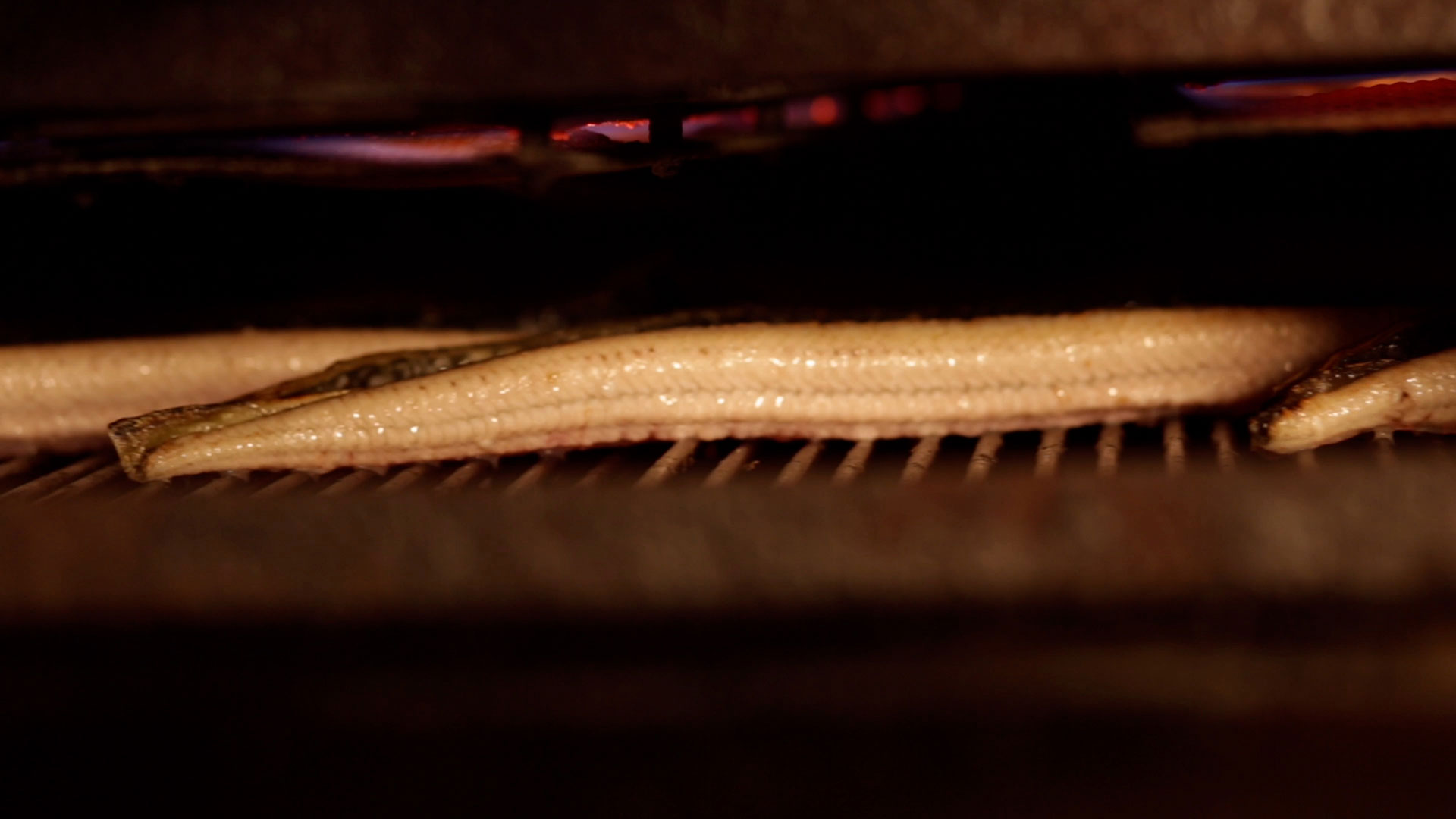
Grill the eel meat side to achieve crispy outside and tender inside.
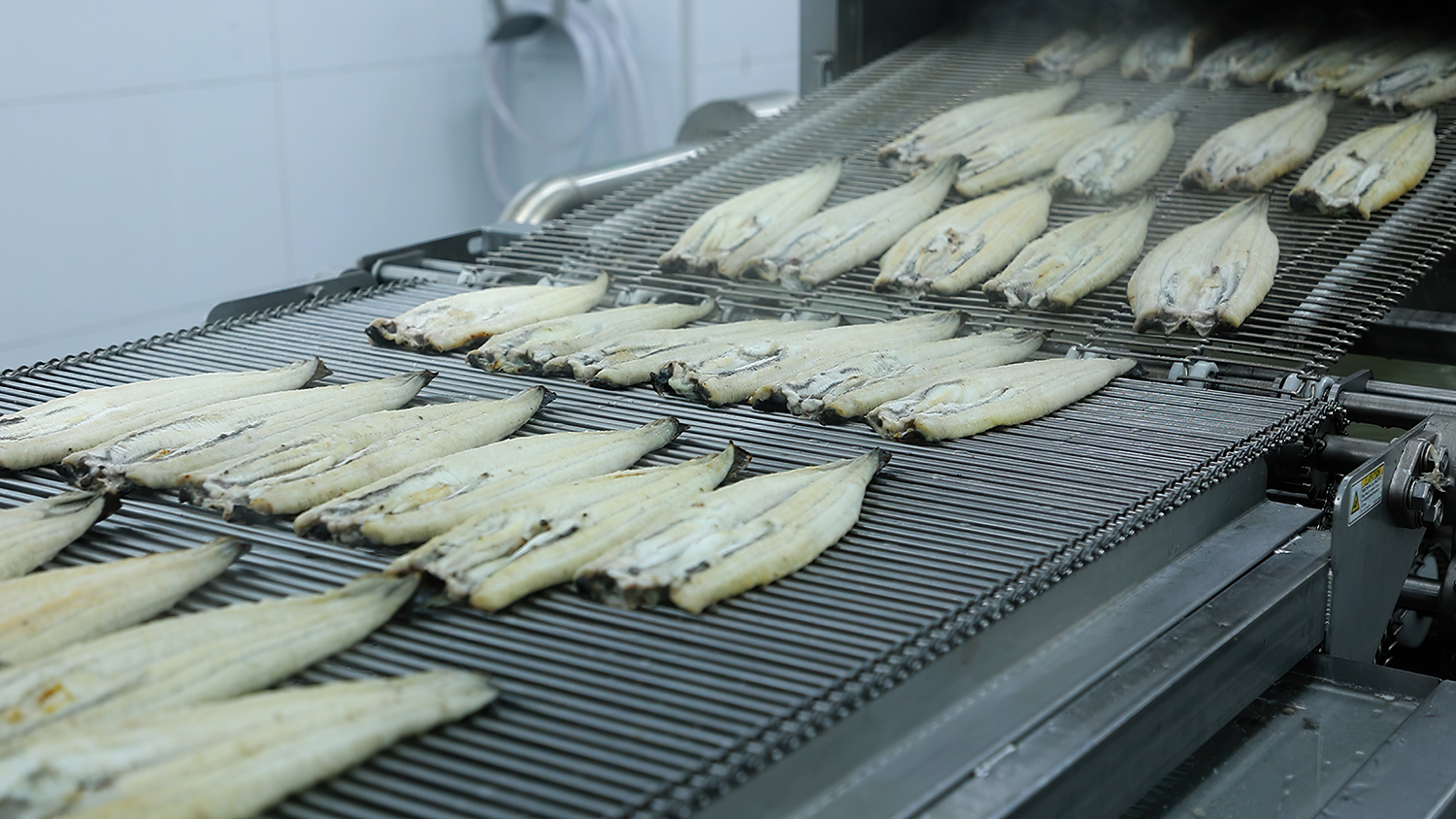
Steam cooking ensures soft and tender texture while thoroughly sterilizing.
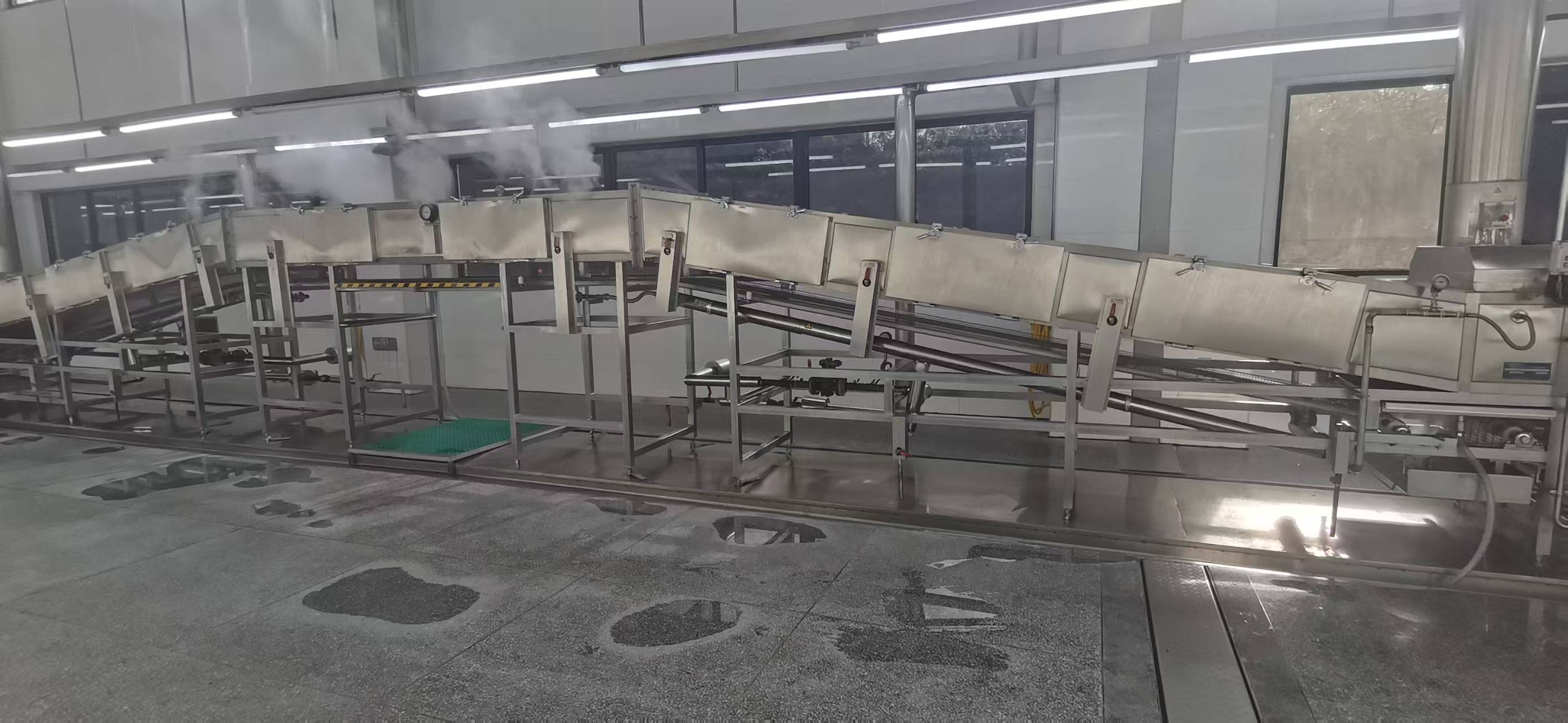
First glaze application, eel fillet shaping.
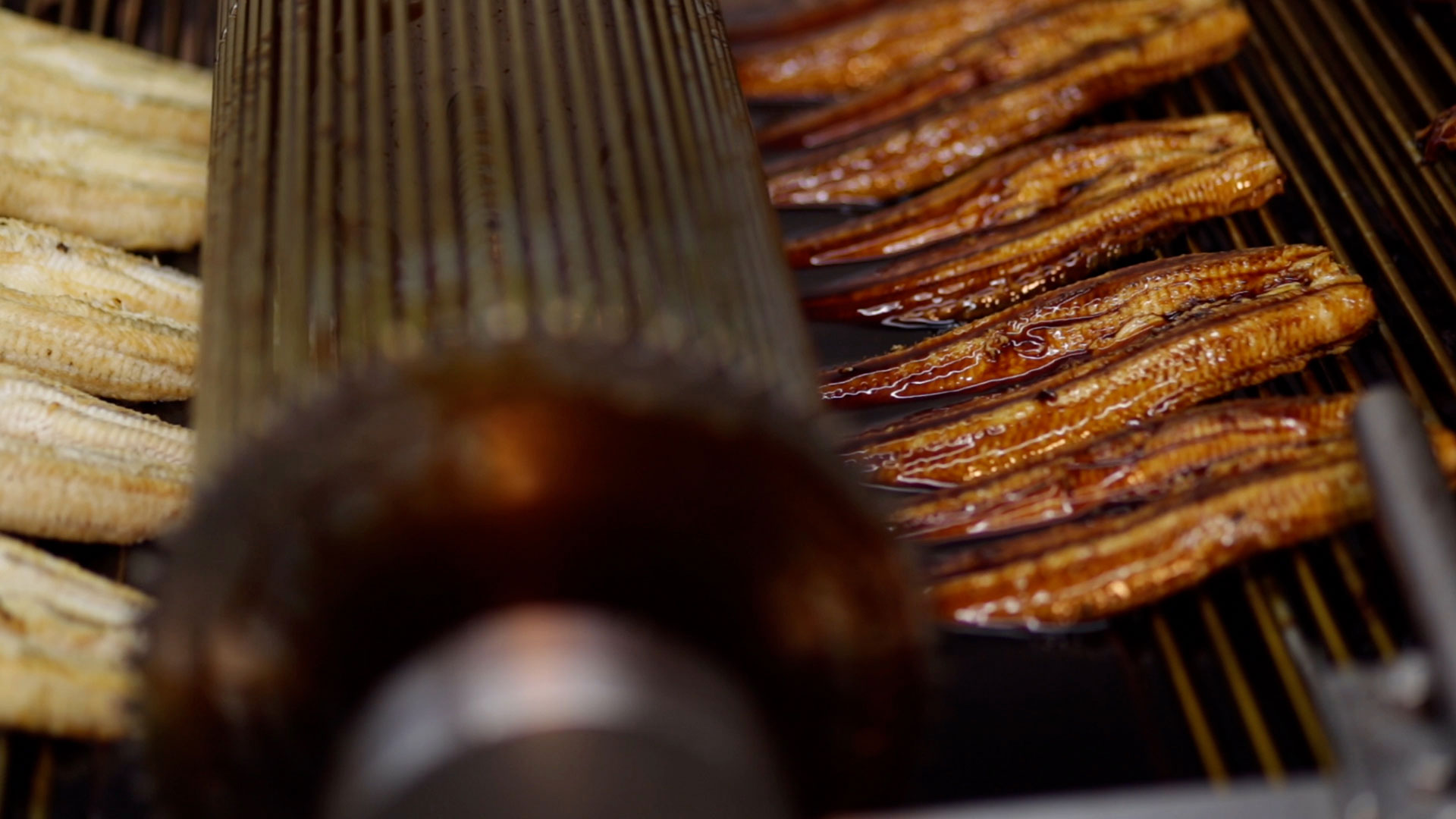
Second glaze application, initial flavor infusion.
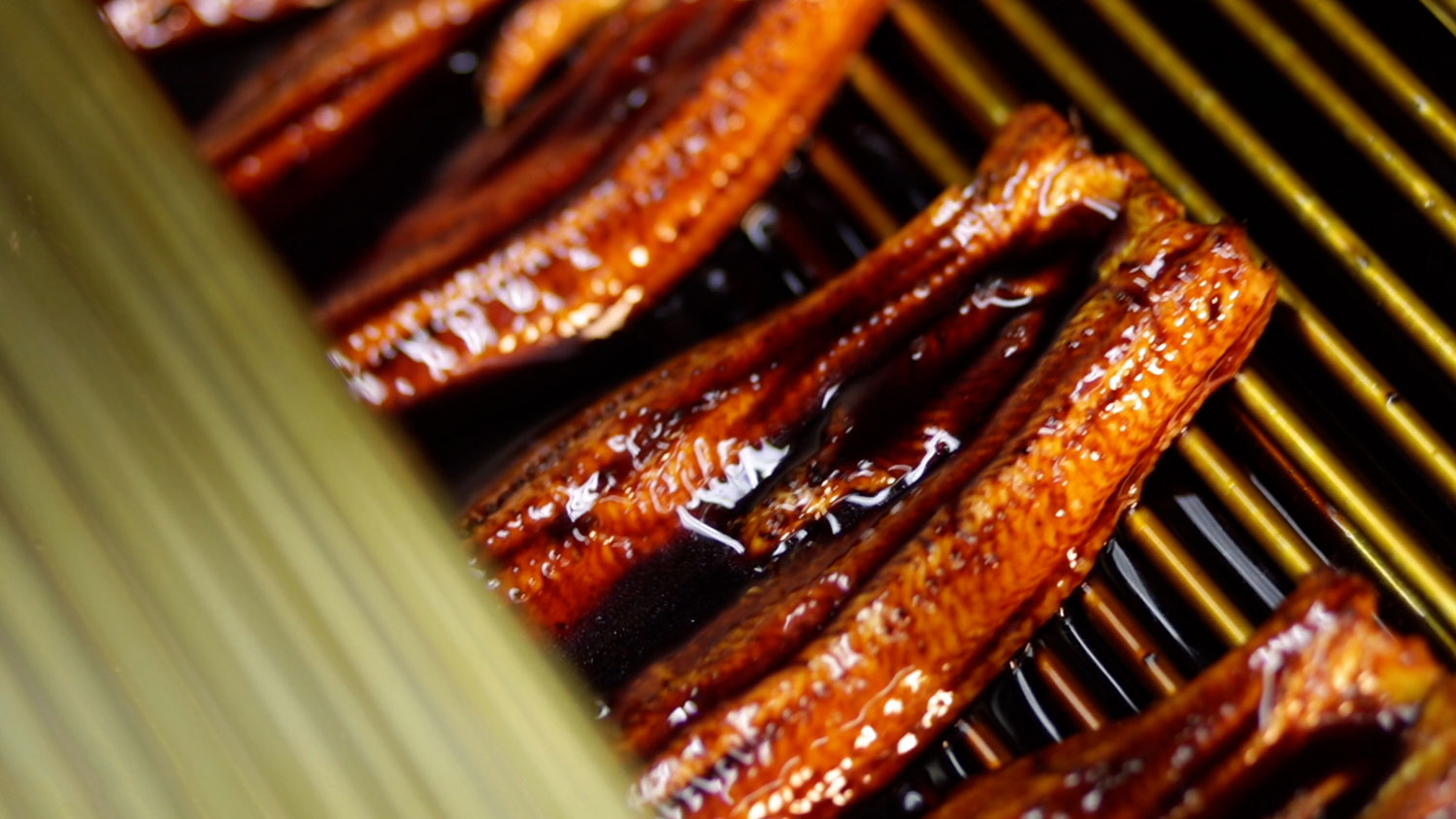
Third glaze application, flavor consolidation.
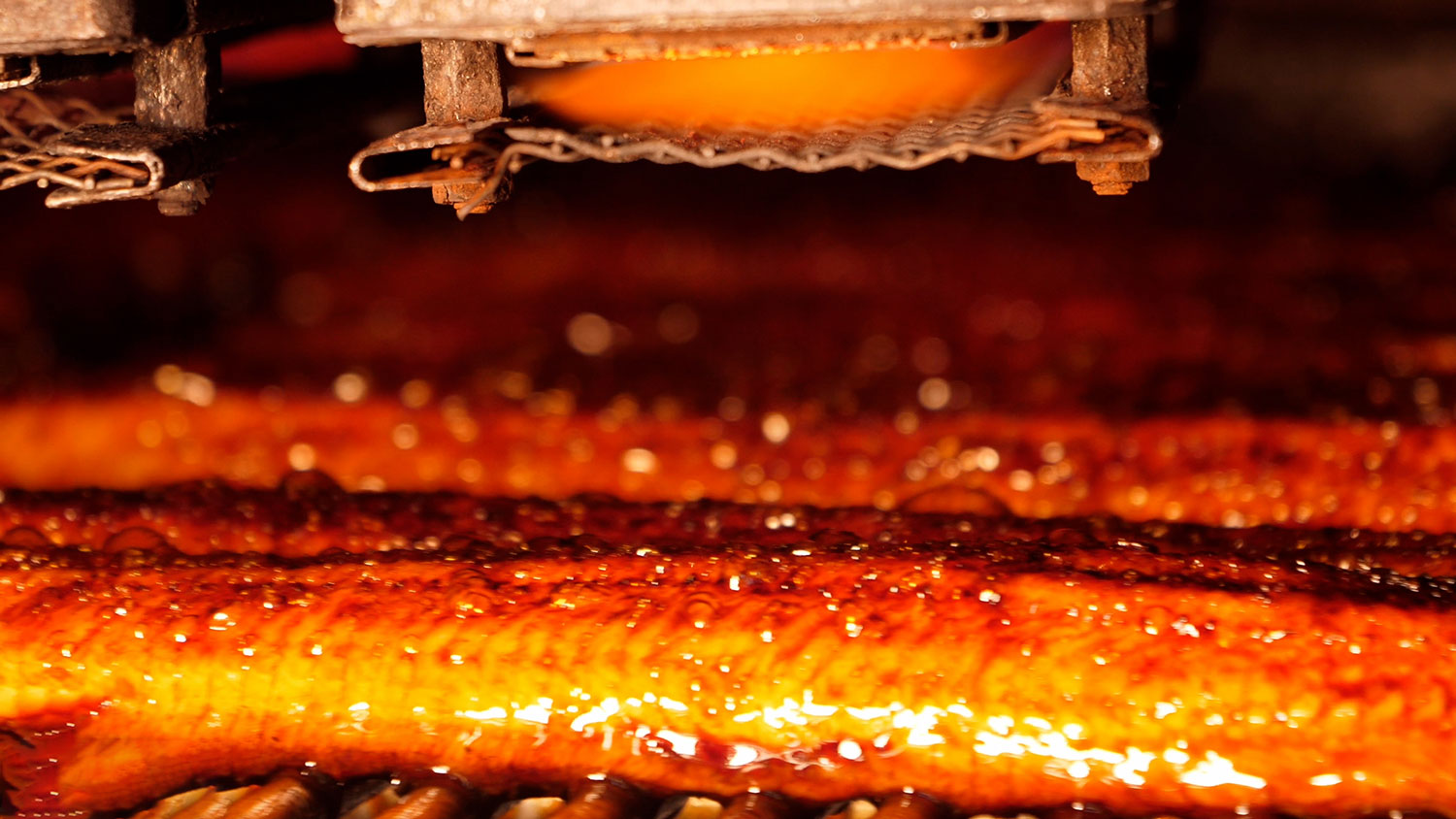
Fourth glaze application, slow grilling over low heat, uniform flavor penetration on both skin and meat sides.
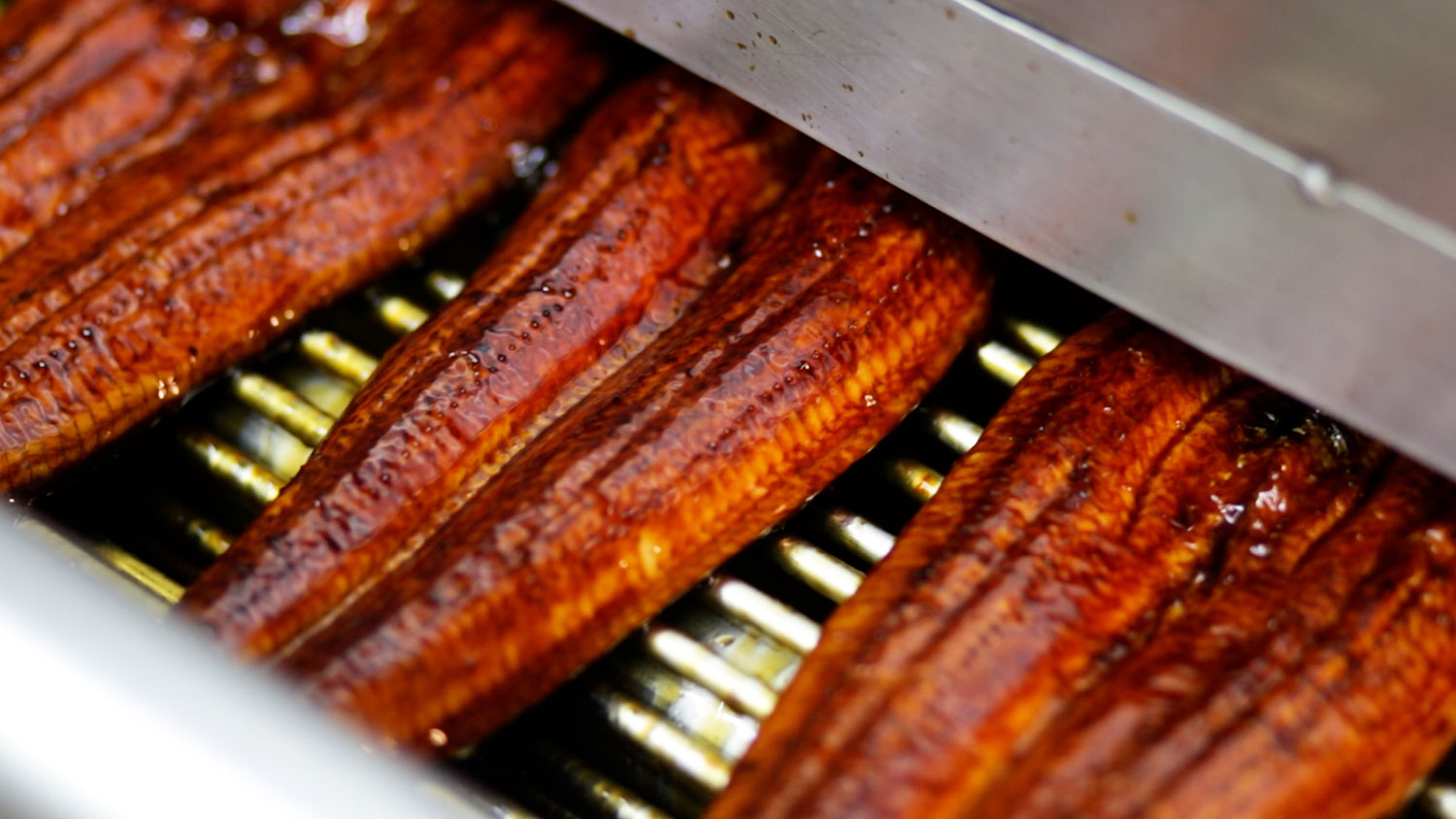
IQF double spiral freezing for maximum freshness preservation.
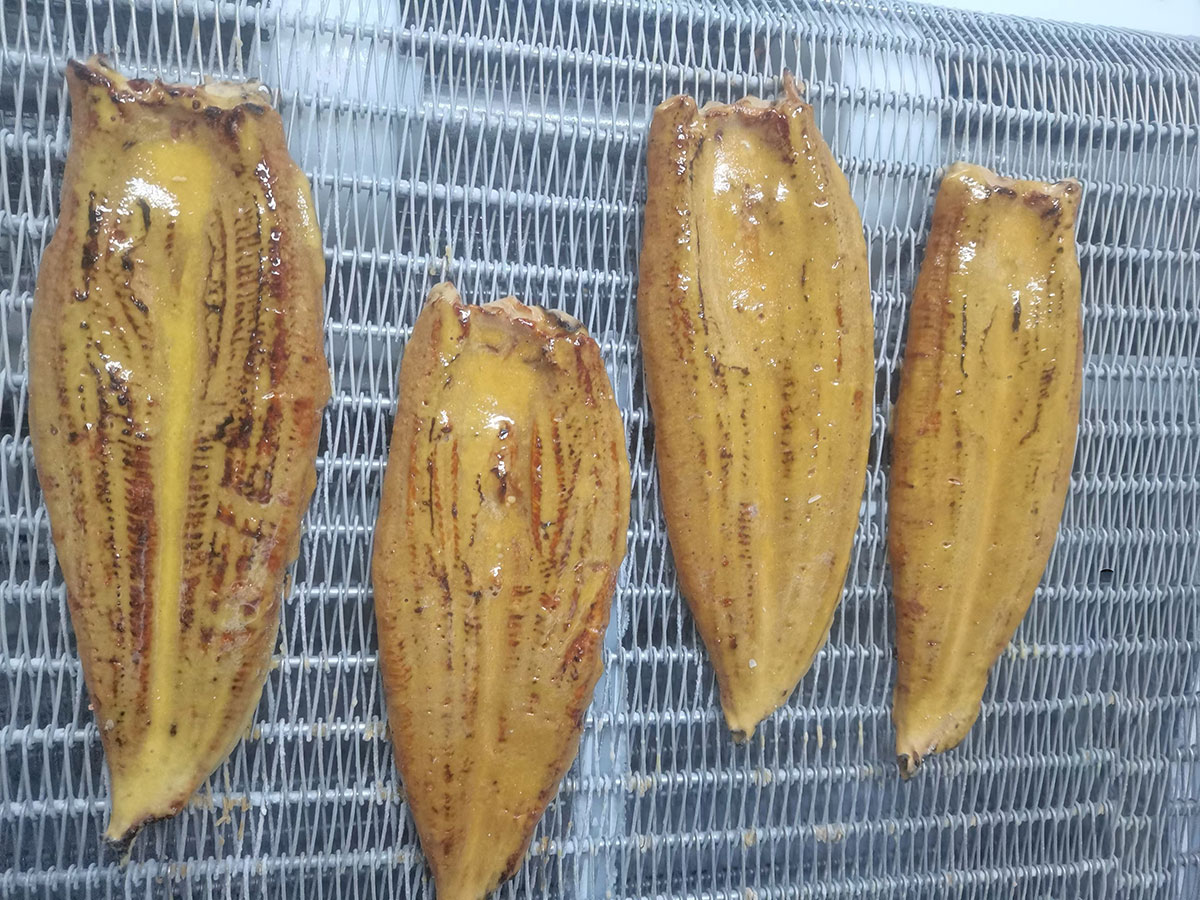
Microbiological and drug residue testing of finished products per batch.
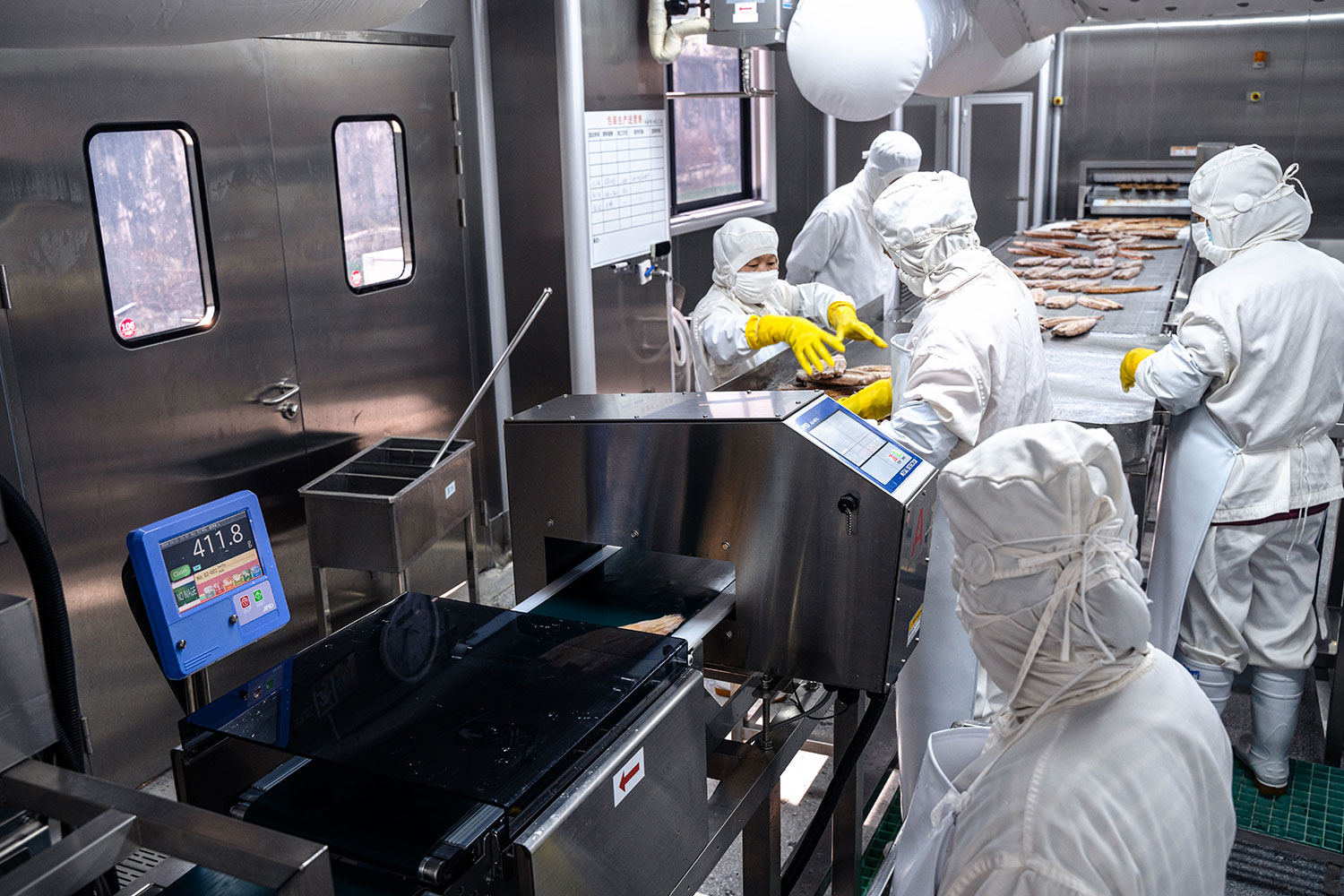
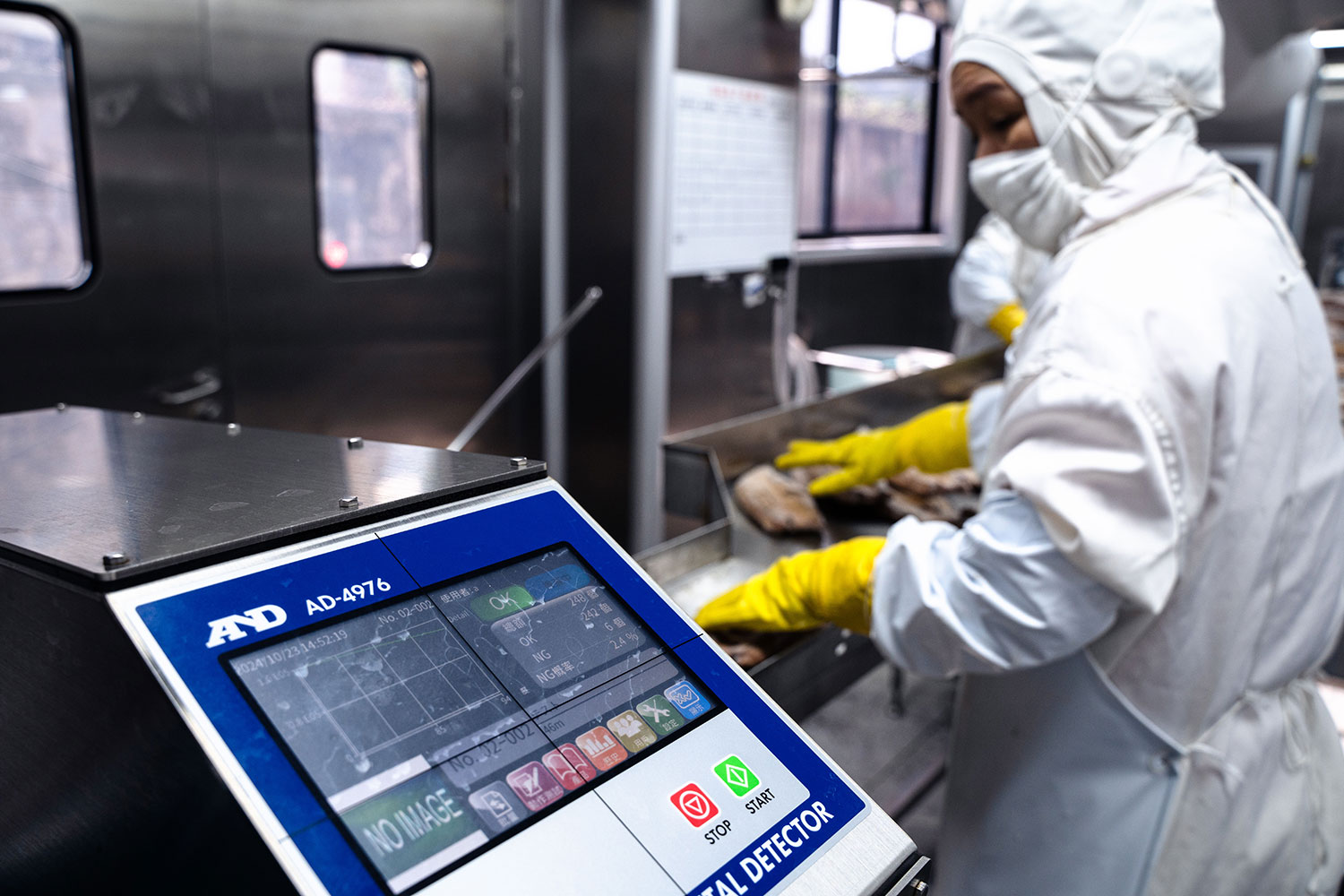
Metal detector testing to completely eliminate the risk of metal impurity (grilling wire) residues.
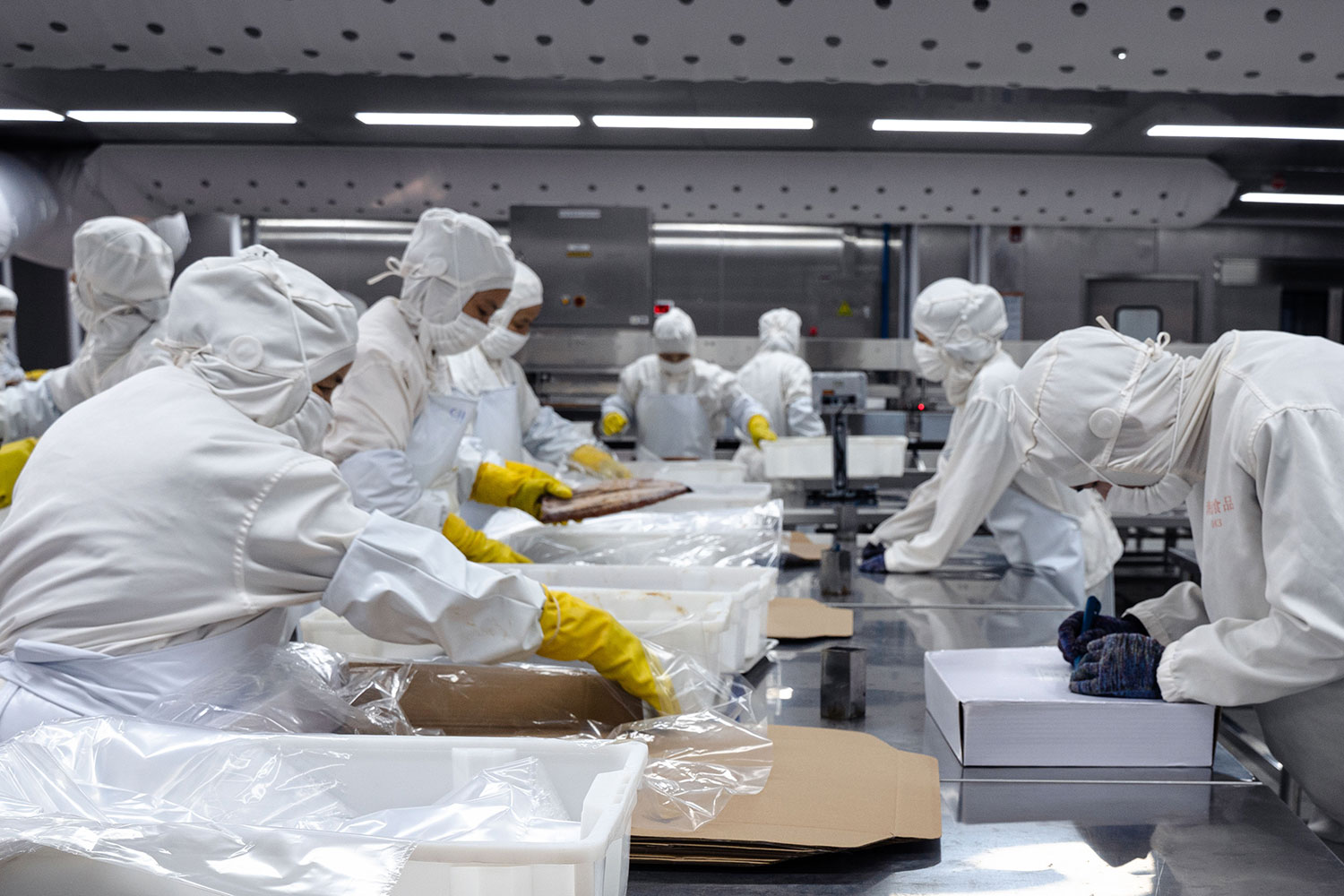
Sorting and packaging into bags according to finished product specifications.
Storage in cold storage at -18℃ or below.